

An ai agency builds custom software for businesses using AI models and automation tools. You charge a monthly fee or project price. Most agencies serve small businesses with 5 to 50 people. They automate sales, support, and operations. The market grew 340% in 2025 according to Google Cloud's generative AI use case report. Every business needs this work done. Not every business knows how to hire engineers or which tools to use.
Why Start an AI Agency in 2026
A recruiting firm paid $180,000 in salary for three coordinators. They scheduled calls, sent follow-ups, updated spreadsheets. An ai agency replaced them with two agents in 11 days. The firm now pays $3,200 per month. The agents book 40% more calls because they respond in two minutes, not two hours. Our guide to AI agents for business covers the sales, support, and ops tasks these firms automate.
This gap exists everywhere. Small businesses know AI matters. They read headlines. They see tools. They do not know what to build first. They do not trust freelancers on Upwork. They need someone to build it, install it, and train their team.
Market Size and Demand
The ai agency market will hit $67 billion by 2028. That number comes from IDC's AI spending forecast. Right now, in November 2026, only 14% of businesses with under 100 employees use AI automation daily. The other 86% are your customers.
Service businesses are the best clients:
- Marketing agencies (7,200 in the US with 10 to 50 people)
- Recruiting firms (3,100 firms)
- Consulting practices (22,000 small firms)
- Course creators (estimated 15,000 with revenue over $500k)
- SaaS founders (8,400 bootstrapped companies)
They all do repeat work. Sales calls, proposal writing, client onboarding, reporting. Agents handle this faster than people.

What Services AI Agencies Sell
Most successful ai agency businesses offer three core services. Each one solves a different problem.
Sales agents handle inbound leads and outbound outreach. They reply to web forms in 90 seconds. They send follow-up emails based on prospect behavior. They book meetings when someone is ready. A sales agent can cost $2,500 per month to build and $800 per month to maintain. The client saves $65,000 per year in salary. If your main need is answering calls and booking meetings, our AI receptionist guide for agencies covers how that works.
Support agents answer common questions, route complex issues to humans, and update tickets. They work 24 hours per day. Response time drops from 4 hours to 30 seconds. A marketing agency uses a support agent to answer client questions about campaign performance, budget changes, and reporting. The agent pulls data from Google Ads and HubSpot. The agency owner sleeps through the night.
Operations agents do the boring repeat work. Invoicing, data entry, report generation, calendar management. A consultant uses an ops agent to send proposals, track project hours, and invoice clients every Friday. What took 6 hours now takes 6 minutes.
How to Package Your AI Agency Services
You need a fixed offer. Clients will not buy "we build AI stuff." They buy outcomes. Here is how to price and package. If you are weighing what a partner will charge before you hire, our AI consulting guide shows what owners should buy first. If you are still choosing a first project, AI for small business: where to start without wasting money covers which jobs to automate first.
Fixed-Price Project Model
Charge $8,000 to $18,000 to build one agent. Include discovery, build, testing, and training. Set a 14 day deadline. If you miss it, refund 20%. This creates urgency and trust.
What you deliver:
- One working agent in their tools (CRM, email, Slack)
- 90 minute training session for their team
- Two weeks of fixes after launch
What you do not include:
- Changes to scope after kickoff
- Integration with tools not discussed in discovery
- Ongoing maintenance (that is a separate retainer)
Monthly Retainer Model
After the build, offer a retainer for $1,200 to $3,500 per month. This covers monitoring, updates, and improvements. Harvard Business Review's piece on AI and collective intelligence explains why ongoing support matters. AI systems need tuning as business processes change. Clients often ask for chatbots too, and our guide on AI chatbot for business explains what to build and how.
Your retainer includes:
- 10 hours of changes or improvements per month
- Monitoring and bug fixes
- Monthly performance report
Clients stay for an average of 11 months. That adds $13,200 to $38,500 per project.
Done-For-You Outbound Addition
Some agencies add outbound marketing on top of the agents. You run cold email and LinkedIn for the client. The agents handle replies and booking. This turns AI from a cost saver into a revenue maker. Charge $4,000 to $7,000 per month for this.
One ai agency did this for a recruiting firm. They sent 2,000 emails per week to hiring managers. The agent qualified replies and booked 18 calls per month. The firm closed 3 new clients in the first 60 days. Revenue went up $47,000. They paid $5,200 per month for the service.

Tech Stack for an AI Agency
You need five tools to run projects. Do not overcomplicate this.
| Tool Category | Recommended Option | Monthly Cost | Why Use It |
|---|---|---|---|
| AI Model API | OpenAI or Anthropic | $200-$800 | Best quality for business tasks |
| Workflow Platform | n8n or Make | $0-$60 | Connects agents to client tools |
| Database | Supabase or Airtable | $0-$40 | Stores conversation history |
| Hosting | Railway or Render | $15-$50 | Runs the agent 24/7 |
| Monitoring | Langfuse or Helicone | $0-$30 | Tracks cost and performance |
Total monthly cost to run one client project: $215 to $980. Your retainer is $1,200 to $3,500. Margin is healthy.
Choosing the Right AI Model
Most ai agency projects use GPT-4o or Claude 3.5 Sonnet. Both cost about $10 per million tokens. For business tasks, quality beats price. A bad response costs you client trust.
Use GPT-4o when:
- You need structured output (JSON, tables)
- The task requires math or analysis
- You integrate with other OpenAI tools (voice, vision)
Use Claude when:
- You need long context (100k+ tokens)
- Writing quality matters (proposals, emails)
- You want lower refusal rates on edge cases
Check the OpenAI developer documentation for current pricing and limits. Test both models on your client's actual data during discovery. Pick the one that performs better.
Workflow Automation Tools
Agents need to connect to the client's existing tools. CRM, email, calendar, Slack. You build this with n8n or Make.
n8n is better if you:
- Want to self-host (cheaper at scale)
- Need custom code nodes
- Have technical clients who want to see the logic
Make is better if you:
- Want fast setup with templates
- Prefer visual builders
- Do not want to manage servers
Both cost under $60 per month for most client projects. The MLOps resource collection has examples of production workflows if you want to see how larger teams structure this.
How to Get Your First AI Agency Clients
You do not need a website or ads. You need one case study and direct outreach.
Build Your First Project for Free
Find one business owner in your network. Offer to build one agent for free. Pick someone who:
- Runs a service business
- Has 5 to 20 people
- Does repetitive work you can automate
- Will give you a video testimonial
Deliver it in 14 days. Record the results. Revenue increase, time saved, errors eliminated. Get the owner on video explaining what changed.
Outbound to Your Ideal Client
Make a list of 100 businesses that look like your free client. Find the owner's email. Send this:
"I built a sales agent for [Free Client Company]. It books 18 calls per month on autopilot. Took 12 days to build. I can do the same for [Their Company]. Want to see how it works?"
No hype. No promises. Just facts and a question. 8% reply rate is normal. That is 8 conversations from 100 emails.
What to Say on the First Call
Ask these questions:
- What repeat work takes the most time each week?
- How many hours does your team spend on it?
- What would change if that work happened automatically?
- When do you want to start?
Listen more than you talk. Find the painful task. Quote a fixed price. Set a 14 day deadline. Ask for 50% upfront.
If you work with agencies or service businesses and want help building custom AI agents that go live in 14 days, you can see exactly what we build and how the process works.
Project Delivery Process
Every ai agency needs a repeatable process. This is the one that works.
Week 1: Discovery and Design
Day 1-2: Kickoff call and tool audit. Get access to their CRM, email, and any other systems the agent will touch. Record one team member doing the work manually. Ask them to narrate every step.
Day 3-4: Write the agent's instructions and test basic logic. Use their real data. Show them a demo in a staging environment. Get approval to move forward.
Day 5-7: Build the integrations. Connect the agent to their tools. Test each connection. Make sure data flows both ways.
Week 2: Build and Launch
Day 8-10: Full system test with their team. Have them use it like it is live. Find every edge case. Fix bugs.
Day 11-12: Train their team. Show them how to review agent actions, override decisions, and request changes. Record the training session.
Day 13-14: Go live. Monitor every interaction for 48 hours. Fix any issues immediately. Deliver the final report.
Pricing Your AI Agency Services
Most agencies charge too little. They think like freelancers, not business owners. Here is how to price for profit.
Value-Based Pricing Math
Find out what the client pays now. A sales coordinator costs $55,000 per year with benefits. Your agent does 70% of that work. You save them $38,500 per year. Charge $12,000 to build plus $2,400 per year retainer. Total year one cost: $14,400. Savings: $24,100. ROI: 167%.
The client sees huge value. You make good margin. Everyone wins.
Common Pricing Mistakes
Do not charge hourly. Clients hate surprises. You cap your income. Fixed pricing aligns incentives.
Do not offer unlimited revisions. Scope creep kills profit. Include two rounds of changes. Charge $400 per hour for extras.
Do not skip the retainer. One-time projects end. Retainers build recurring revenue. Your business becomes predictable.
Common AI Agency Challenges
Three problems show up in every ai agency. Here is how to handle them.
Client Expects Magic
A client once asked for an agent that "reads minds and closes deals." Reality check: agents follow rules you write. They do not think. They execute.
Set expectations in discovery:
- Show them exactly what the agent will do
- List what it will not do
- Give them three examples of edge cases
- Make them sign off before you build
Scope Creep After Launch
Client: "Can we add just one more feature?" Translation: "Can you work for free?"
Your response: "Yes, we can add that. It is outside the original scope, so the price is $X and the timeline is Y days. Want me to send the change order?"
Price changes at 1.5x your normal rate. Urgency costs extra.
Quality Control at Scale
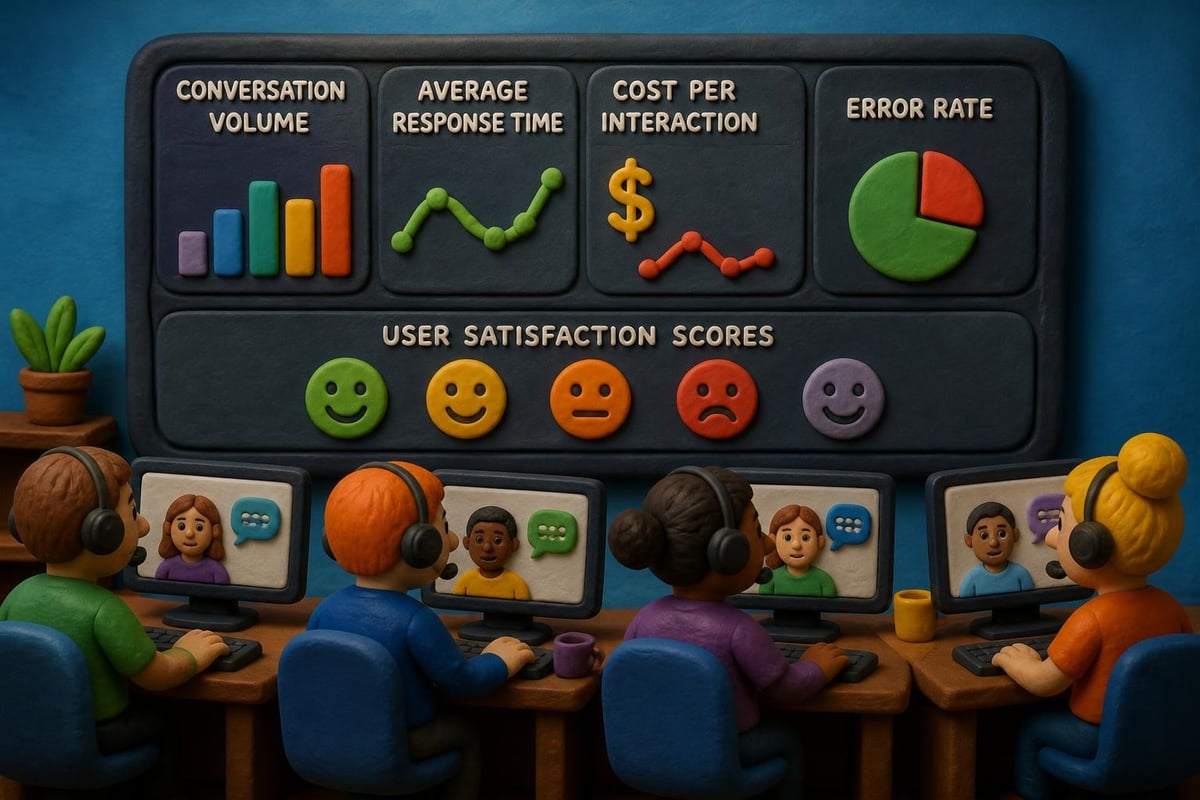
You cannot manually review every agent action when you have 10 clients. Use monitoring tools. Set alerts for:
- Error rate above 2%
- Response time over 5 seconds
- Cost per conversation over $0.50
- Negative sentiment in user feedback
Langfuse and Helicone both track this automatically. Review dashboards every Monday morning.
Legal and Safety Considerations
The ai agency space has real risks. Handle them properly.
Data Privacy and Security
Your agents process customer data. Names, emails, sometimes payment info. You need:
- SOC 2 Type II certification (costs $15,000 to $40,000)
- Data processing agreements with every client
- Encryption for data at rest and in transit
- Regular security audits
NIST's updated guidelines on managing misuse risk explain minimum standards. Read them. Follow them. Violations end your business.
Model Safety and Hallucinations
Agents sometimes make up facts. This is called hallucination. It happens with every model. You reduce risk by:
- Adding verification steps (agent checks its own output)
- Using retrieval augmented generation (RAG) for factual questions
- Testing with red team prompts before launch
- Logging every output for review
Never let an agent send emails, make purchases, or change databases without human approval. Build confirmation steps into every high-risk action.
Regulatory Compliance
AI regulations change fast. OECD's AI policy observatory tracks international rules. The EU AI Act passed in 2024. It classifies systems by risk. Most business agents are "limited risk" which means transparency requirements. You must tell users they are talking to an AI.
In the US, state laws vary. California requires disclosure. New York requires bias testing for hiring tools. Know your client's jurisdiction. Build compliance into every project.
How to Scale Your AI Agency
Growth requires systems, not hustle. Here is the path from $10k to $100k per month.
Months 1-3: Prove the Model
Goal: 3 clients at $12k each plus $2k/month retainers. Total MRR: $6k.
Focus:
- Deliver fast (under 14 days)
- Get video testimonials
- Document your process
- Build reusable templates
Months 4-6: Hire Your First Contractor
Goal: 8 clients, $16k MRR.
You cannot deliver 8 projects alone. Hire one contractor at $40/hour to handle:
- Client onboarding calls
- Integration setup
- Testing and QA
You focus on sales and high-level design.
Months 7-12: Productize Your Offer
Goal: 15 clients, $30k MRR.
Stop custom building everything. Create three packages:
- Sales Agent Starter ($8k build, $1.5k retainer)
- Support Agent Plus ($12k build, $2k retainer)
- Full Stack Automation ($18k build, $3.5k retainer)
Each package has a fixed scope, fixed tools, and fixed timeline. No more discovery calls that take 3 hours.
Team Structure at Scale
By month 12, you need:
- 1 sales person (commission only, 15% of project value)
- 2 delivery contractors ($40/hour each)
- 1 part-time project manager ($30/hour, 20 hours/week)
- You (CEO, sales closer, technical review)
Labor cost: about 35% of revenue. Healthy margin remains.
FAQ
How long does it take to build an AI agent?
Most agents take 10 to 14 days from kickoff to launch. Simple chat bots take 5 days. Complex multi-tool integrations take 20 days. Speed depends on how many systems you connect and how much testing the client wants.
Do I need coding skills to start an AI agency?
You need basic technical understanding. You should know how APIs work, how to read JSON, and how to use no-code tools like n8n or Make. You do not need to write code from scratch. Most agencies hire contractors for custom development.
What industries work best for AI agencies?
Service businesses with repeat tasks and 5 to 50 employees are ideal. Marketing agencies, recruiting firms, consulting practices, course sellers, and SaaS companies all need this work done. Avoid retail, manufacturing, and healthcare unless you have domain expertise and legal support.
An ai agency solves real problems for small businesses that cannot afford engineering teams. You build agents, install them, and charge monthly fees. The market is wide open in 2026 because demand far exceeds supply. Vieerx builds custom AI agents and automations for agencies and service businesses with 5 to 50 people. Sales agents, support agents, ops agents. We also run done for you outbound marketing on top. Live in 14 days. If you want to see what we build and how it works, book a free demo at https://cal.com/tanvieerx/agentic-review.