
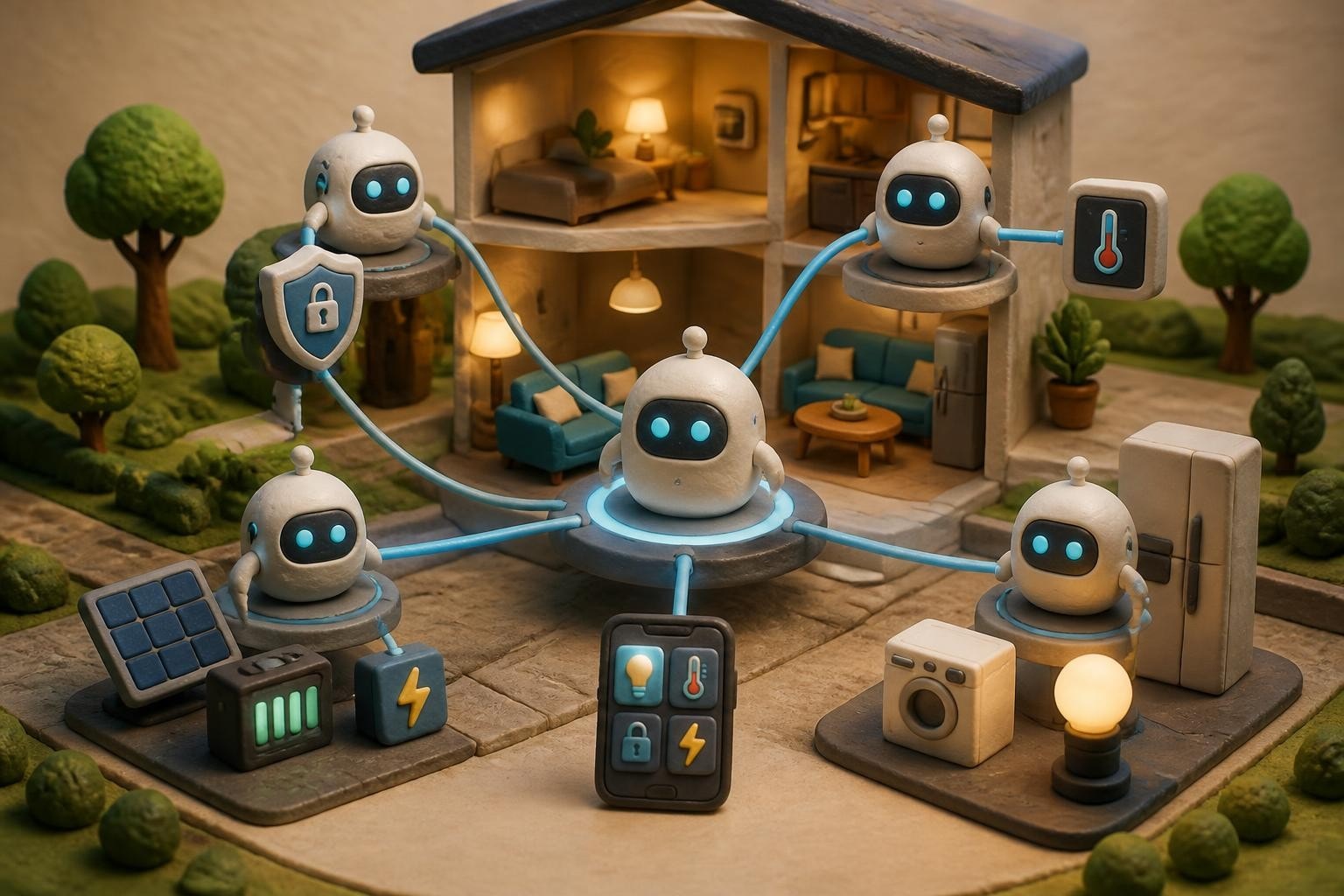
The integration of artificial intelligence in homes has evolved from a luxury novelty into a practical necessity for millions of households worldwide. Modern residential AI systems now coordinate everything from climate control and security monitoring to energy optimization and appliance management. As we progress through 2026, the sophistication of these systems continues to advance, driven by improvements in machine learning algorithms, edge computing capabilities, and the proliferation of connected devices. Understanding how artificial intelligence in homes functions, the benefits it delivers, and the considerations for deployment has become essential knowledge for both consumers and businesses developing automation solutions.
The Evolution of Residential AI Systems
Artificial intelligence in homes has progressed through distinct generations of capability. Early systems relied on simple rule-based automation: "If motion is detected, turn on lights." Today's AI agents employ sophisticated machine learning models that adapt to occupant behavior, predict needs, and coordinate multiple systems simultaneously.
From Smart Devices to Intelligent Ecosystems
The transformation began with isolated smart devices-thermostats, speakers, and cameras that operated independently. Modern artificial intelligence in homes creates cohesive ecosystems where devices communicate, share data, and make collective decisions. A contemporary AI system might analyze occupancy patterns, weather forecasts, energy prices, and calendar appointments to pre-emptively adjust heating, lighting, and security settings.
According to the Stanford HAI Artificial Intelligence Index Report, household adoption of AI-enabled devices increased by 34% between 2024 and 2025, with voice assistants and automated climate systems leading deployment. This acceleration reflects both improved affordability and growing consumer confidence in AI reliability.
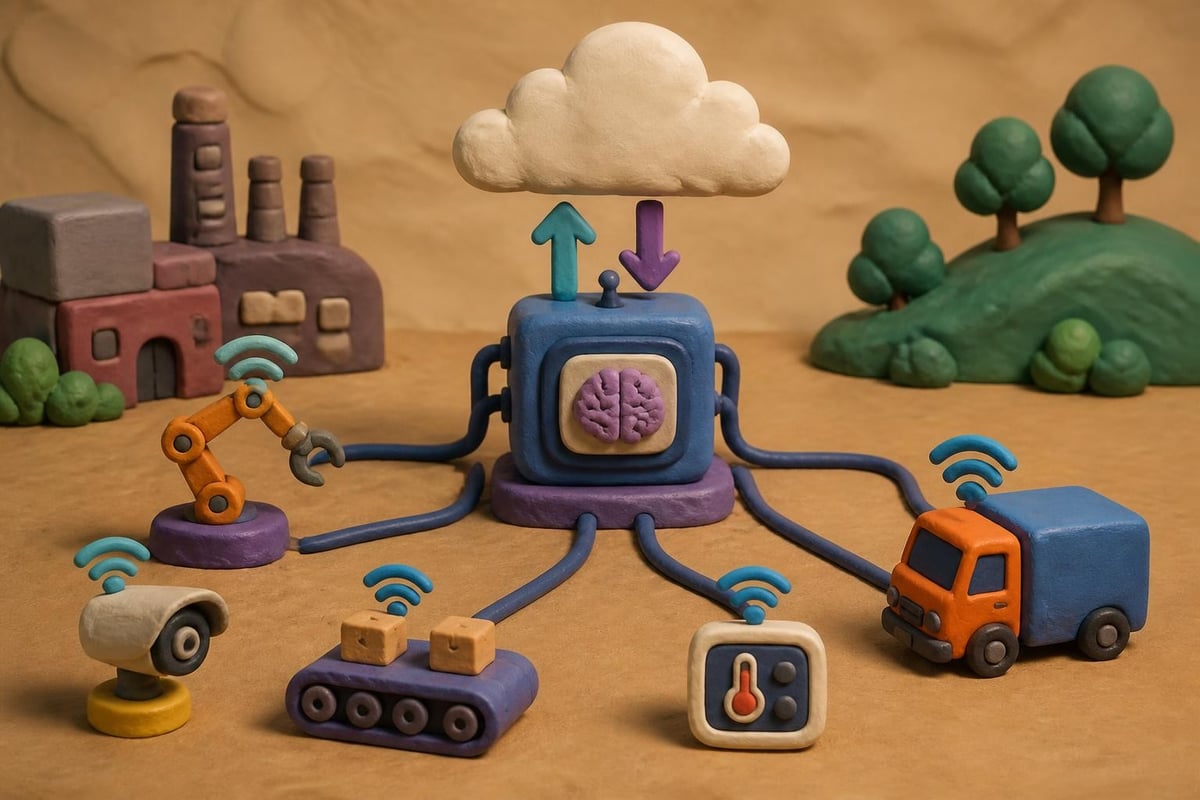
Research on autonomous LLM agents and AIoT architectures demonstrates how large language models now enable homes to understand natural language commands, context, and even ambiguous requests. Rather than programming specific scenarios, occupants can describe desired outcomes: "Make the house ready for a dinner party" triggers a coordinated sequence across lighting, temperature, music, and security systems.
Core Applications Transforming Daily Living
Artificial intelligence in homes delivers tangible value across several critical domains. Understanding these application areas helps businesses identify opportunities for AI agent deployment and customization.
Security and Access Management
Modern AI security systems surpass traditional motion detection by employing computer vision to distinguish between family members, guests, delivery personnel, and potential threats. Facial recognition, gait analysis, and behavioral pattern recognition work in concert to provide nuanced security responses.
Key capabilities include:
- Real-time threat assessment using multimodal sensor fusion
- Adaptive alert thresholds that reduce false positives
- Integration with emergency services and neighborhood security networks
- Privacy-preserving processing at the edge to minimize data transmission
The OWASP Internet of Things project provides essential guidance on securing these systems against common vulnerabilities. Weak authentication, insecure network services, and lack of secure update mechanisms remain persistent risks in home AI deployments.
Consumer guidance from Consumer Reports on home security cameras emphasizes the importance of encryption standards, local storage options, and transparent privacy policies when selecting AI-enabled security devices.
Energy Management and Sustainability
Artificial intelligence in homes delivers substantial environmental and economic benefits through intelligent energy management. AI agents analyze consumption patterns, grid pricing, renewable generation, and occupancy to optimize when and how energy is used.
| Energy Management Function | AI Capability | Typical Savings |
|---|---|---|
| HVAC Optimization | Predictive climate control based on weather, occupancy, and thermal modeling | 20-30% reduction |
| Solar Integration | Real-time arbitrage between grid, battery, and solar based on pricing signals | 35-45% cost reduction |
| Appliance Scheduling | Load shifting to off-peak hours while maintaining service levels | 15-25% reduction |
| Leak Detection | Anomaly detection in water and energy usage patterns | Prevents catastrophic waste |
A comprehensive review of AI and IoT-integrated home energy management highlights how photovoltaic systems paired with intelligent storage management can achieve near-zero grid dependence in favorable climates. The AI agents coordinate charging, discharging, and consumption to maximize renewable utilization while maintaining reliability.
Health and Ambient Assisted Living
For aging populations and individuals with health conditions, artificial intelligence in homes provides critical support while preserving independence. Ambient sensors monitor activity patterns, detect falls, track medication adherence, and identify deviations from normal routines that might indicate health issues.
Healthcare integration features:
- Continuous vital sign monitoring through non-invasive sensors
- Medication reminders with verification through computer vision
- Emergency response coordination with automatic caregiver notification
- Cognitive assistance for daily tasks and appointment management
- Social connection facilitation through proactive communication prompts
These systems must balance comprehensive monitoring with privacy preservation. Edge processing architectures that analyze data locally and transmit only alerts or aggregated insights address privacy concerns while maintaining effectiveness.

Technical Architecture and Implementation Considerations
Deploying effective artificial intelligence in homes requires careful architectural decisions that balance performance, privacy, cost, and reliability.
Edge Computing versus Cloud Processing
The optimal architecture distributes intelligence between edge devices and cloud infrastructure. Time-sensitive decisions-unlocking doors, responding to security events, adjusting lighting-require local processing to eliminate network latency. Complex analytics, model training, and cross-device coordination benefit from cloud computational resources.
Edge processing advantages:
- Sub-100ms response times for critical functions
- Operation during internet outages
- Privacy preservation through local data processing
- Reduced bandwidth consumption and cloud costs
Cloud processing advantages:
- Access to powerful computational resources for complex models
- Centralized coordination across multiple properties
- Continuous model improvement through aggregated learning
- Simplified updates and maintenance
The IEEE standard for pre-trained LLM applications in smart homes addresses architecture requirements, safety considerations, and performance benchmarks for deploying large language models in residential environments. Businesses developing home AI solutions should monitor this emerging standard to ensure compatibility and safety.
Data Privacy and Security Frameworks
Artificial intelligence in homes generates extensive data about occupant behavior, preferences, and routines. Protecting this sensitive information requires comprehensive security frameworks addressing collection, storage, processing, and sharing.
Research from NIST on smart-home user security perceptions reveals significant gaps between user expectations and actual security practices. Many consumers assume manufacturers implement robust protections by default, yet fail to change default passwords, enable encryption, or review access permissions.
Security best practices for home AI systems:
| Security Layer | Implementation | Risk Mitigation |
|---|---|---|
| Authentication | Multi-factor authentication, biometric verification | Prevents unauthorized access |
| Encryption | End-to-end encryption for all data transmission | Protects against interception |
| Network Segmentation | Isolated IoT network separate from primary network | Limits breach impact |
| Regular Updates | Automated security patch deployment | Addresses emerging vulnerabilities |
| Access Control | Granular permissions with principle of least privilege | Minimizes insider risks |
The European Commission's AI Act establishes regulatory requirements for AI systems deployed in the EU, including those used in residential settings. High-risk applications face stringent requirements around transparency, human oversight, and accountability. Businesses targeting European markets must ensure compliance with these regulations.
Business Opportunities in Home AI Automation
The expanding market for artificial intelligence in homes creates substantial opportunities for businesses developing specialized AI agents and automation solutions. The same technologies that optimize residential environments translate directly to commercial applications.
Enterprise Parallels to Home Automation
The challenges solved by home AI systems mirror those faced by enterprises. Resource optimization, predictive maintenance, security management, and coordinated system orchestration apply equally to office buildings, manufacturing facilities, and retail environments.
Businesses can leverage home AI developments by:
- Adapting proven residential algorithms for commercial building management
- Scaling coordination capabilities across multiple facilities and properties
- Applying energy optimization techniques to reduce operational costs
- Implementing similar security and access control frameworks
Organizations like Vieerx demonstrate how AI agent technology scales from residential to enterprise environments, deploying specialized agents that automate tasks across sales, marketing, human resources, and operations.
Developing Vertical-Specific Solutions
Generic smart home platforms serve broad markets, but specialized applications targeting specific needs command premium positioning. Property management companies, senior living facilities, vacation rental operators, and luxury home builders each have distinct requirements that generalized solutions address inadequately.
High-value vertical opportunities:
- Multi-unit residential management with centralized oversight and predictive maintenance
- Healthcare facilities requiring compliance with medical privacy regulations
- Hospitality properties balancing guest experience with operational efficiency
- Educational institutions managing dormitories and campus facilities
- Corporate real estate optimizing hybrid workplace environments
Calculating Return on Investment
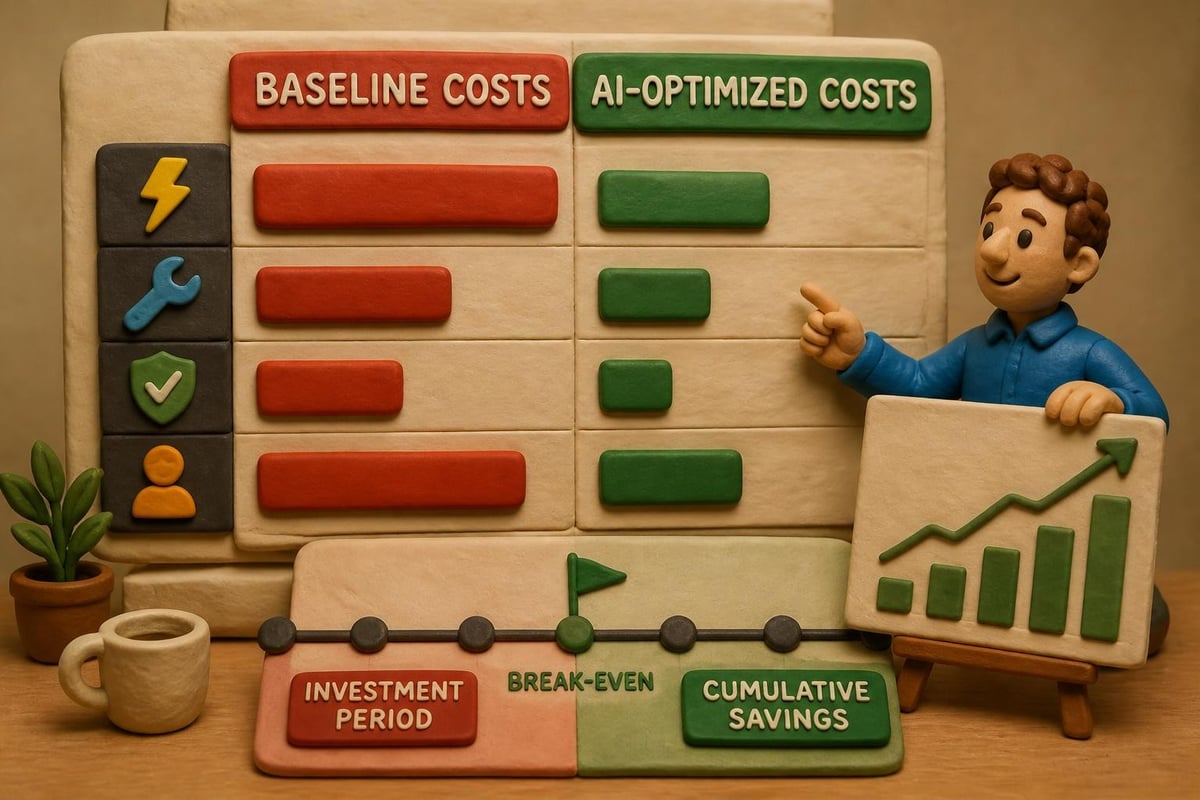
Quantifying the value proposition for artificial intelligence in homes requires comprehensive cost-benefit analysis. Initial deployment costs must be weighed against ongoing operational savings, improved outcomes, and risk mitigation.
Organizations can explore ROI scenarios using analytical tools. The Vieerx model calculator provides frameworks for estimating returns from AI automation across various business functions, methodologies that apply equally to residential and commercial deployments.
Cost components to evaluate:
- Hardware procurement and installation
- Software licensing and subscription fees
- Network infrastructure upgrades
- Training and change management
- Ongoing maintenance and support
Benefit categories to quantify:
- Energy cost reduction from optimized consumption
- Insurance premium reductions through enhanced security
- Property value appreciation from smart home features
- Time savings from automated routine tasks
- Health outcome improvements from ambient monitoring
Implementation Strategy and Best Practices
Successfully deploying artificial intelligence in homes requires methodical planning, stakeholder engagement, and iterative refinement. Businesses developing AI solutions for residential markets should prioritize user experience, reliability, and transparent value delivery.
Phased Deployment Approach
Rather than comprehensive system-wide implementations, successful deployments typically follow staged approaches that build complexity incrementally.
Recommended implementation phases:
- Assessment and baseline establishment: Document current systems, usage patterns, and pain points
- Priority use case selection: Identify highest-impact, lowest-risk initial applications
- Pilot deployment: Implement limited functionality with intensive monitoring
- Evaluation and refinement: Analyze performance, gather user feedback, adjust configurations
- Expansion and integration: Add capabilities and coordinate across systems
- Continuous optimization: Ongoing tuning based on accumulated data and changing needs
This approach minimizes disruption, manages investment risk, and enables learning before large-scale commitment.
User Experience and Adoption
The most sophisticated artificial intelligence in homes fails if occupants find it confusing, unreliable, or invasive. User-centered design principles must guide development and deployment.
Critical UX considerations:
- Transparent operation with clear explanations of automated actions
- Simple override mechanisms that respect user preferences
- Gradual capability introduction to avoid overwhelming users
- Consistent behavior that builds trust through reliability
- Privacy controls that empower users to manage data collection
Research on adaptive smart-home security using multimodal sensor fusion emphasizes the importance of privacy-preserving architectures that process sensitive data locally while still enabling powerful analytics. Users accept AI monitoring more readily when they understand data handling practices and retain control.
Maintenance and Long-Term Support
Artificial intelligence in homes requires ongoing maintenance to sustain performance and security. Unlike traditional static systems, AI agents improve through continuous learning but also require monitoring to prevent drift or degradation.
Maintenance requirements include:
- Regular security updates and vulnerability patches
- Model retraining as usage patterns evolve
- Hardware replacement as sensors and devices age
- Network capacity monitoring and optimization
- User training on new features and capabilities
Businesses should establish clear support structures, proactive monitoring, and predictable update schedules to maintain customer confidence and system effectiveness.
Integration with Broader Smart City Infrastructure
Artificial intelligence in homes increasingly connects to municipal and utility infrastructure, creating opportunities for coordination that benefits both residents and communities.
Grid Integration and Demand Response
Smart homes equipped with AI energy management can participate in utility demand response programs, reducing consumption during peak periods in exchange for rate reductions. Aggregated across neighborhoods, these systems help stabilize grids and enable greater renewable energy integration.
Coordinated vehicle charging, thermal storage optimization, and flexible appliance scheduling allow artificial intelligence in homes to function as distributed grid resources. Utilities gain load flexibility while residents capture economic value from their participation.
Community Safety Networks
Residential security systems that share threat intelligence (while preserving individual privacy) create neighborhood-scale safety networks. When one home's AI detects suspicious activity, nearby systems can elevate alertness and coordinate monitoring.
These networks require careful governance to prevent false alarms, respect privacy boundaries, and ensure equitable access. Properly implemented, they extend security benefits beyond individual properties while maintaining individual control.
Environmental Monitoring
Home-based sensors collecting air quality, noise levels, temperature, and other environmental data contribute to municipal monitoring networks. Artificial intelligence in homes aggregates and analyzes this distributed data to identify pollution sources, track climate trends, and inform public health interventions.
Participation in these networks is typically voluntary and incentivized through reduced fees or priority services. The data must be anonymized and protected to prevent misuse while still enabling valuable community insights.
Artificial intelligence in homes has matured from experimental novelty to practical infrastructure that delivers measurable improvements in comfort, efficiency, security, and sustainability. As these systems become more sophisticated and widespread, businesses have opportunities to develop specialized solutions that address specific market needs while enterprises can apply residential AI innovations to optimize their own operations. Vieerx helps organizations realize these opportunities through customized AI agents that automate business tasks across industries, reducing operational costs while improving outcomes. Whether you're exploring AI for residential applications or seeking to optimize enterprise workflows, intelligent automation delivers quantifiable returns that justify investment.